Birch Tree Redwork: A Designer’s Review for Craft Fair Success
When I first previewed Birch Tree Redwork, I immediately recognized its selling potential for handmade markets and craft fair booths. This machine embroidery design carries a quiet, elegant forest mood without being overly rustic or overly modern. It lands solidly in the farmhouse-meets-minimalist sweet spot that attracts buyers looking for nature-inspired décor and giftable handmade products. As someone who has tested hundreds of embroidery files for commercial production, I want to walk through exactly how Birch Tree Redwork performs on real products, how customers perceive it at a booth, and what you need to check before stitching it for sale.
The name Birch Tree Redwork tells you two important things: the subject is a birch tree, and the color palette is redwork—typically a single rich red thread on a light background. This design belongs to the Forest category, but it does not scream “wilderness.” Instead, it reads as refined, airy, and quietly decorative. The line art style of redwork gives it a hand-drawn, almost vintage feel that stands out against the heavily digitized, multicolor designs many sellers default to. That alone makes it a smart choice for a booth that wants to look curated.
First Impressions: Elegant, Not Overstated
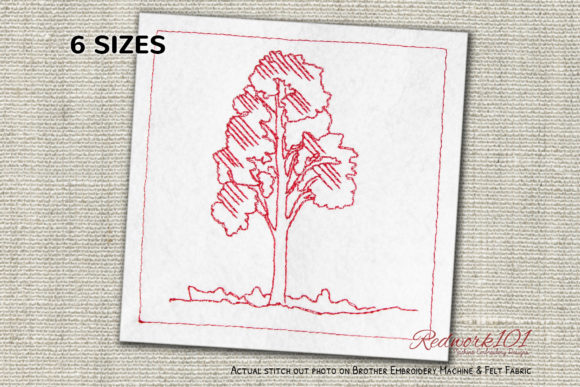
The first thing I noticed about Birch Tree Redwork is how it balances negative space with clean stitch lines. Birch trees have a distinctive white bark with dark horizontal markings, and when rendered in redwork, that silhouette becomes striking without being busy. The use of a single thread color keeps production simple and consistent. For a craft fair seller, that means fewer thread changes, less waste, and faster stitching—critical when you are producing batches of tote bags or tea towels the night before a show.
The designer notes that the outer box stitch shown in the picture is optional. This is an important detail. The box stitch frames the design, but in Birch Tree Redwork, the outer box color is a different color in most cases unless it is part of the design itself. You have the flexibility to skip the box color directly in your embroidery software. I recommend testing both versions. Without the box, the birch tree floats organically on the fabric, which looks lovely on aprons and pillow covers. With the box, it gains a structured, badge-like feel that works well for patches or cap logos.
The mood of Birch Tree Redwork leans toward soft, decorative, and premium. It is not funny or bold in a loud way. It invites a closer look, which is exactly what you want at a craft fair. Customers who stop to examine stitch quality and thread texture are the ones who buy multiples for gifts.
Where Birch Tree Redwork Shines on Your Booth Table
I have tested Birch Tree Redwork across several product types, and here is how each performed in a real selling environment:
Tote Bags and Market Bags
This is where Birch Tree Redwork feels most at home. The vertical shape of a birch tree naturally complements the center panel of a standard tote bag. Stitched in a deep brick red on natural cotton or linen, the design becomes a subtle statement piece. Customers browsing a booth filled with embroidered totes will notice the delicate line work before they notice bold lettering or heavy fills. I would place several totes at eye level on a grid wall or draped over a wooden rack.
Apron Embroidery
Aprons sell well at craft fairs because they appeal to home bakers, cooks, and hobbyists. Birch Tree Redwork stitched on the bib or lower pocket area adds a touch of handmade elegance. Since redwork is traditionally associated with kitchen linens, this design reads as authentic and intentional. The optional box stitch can be left out here to keep the apron soft and drapeable.
Tea Towels and Kitchen Linens
Tea towels are one of the fastest-selling handmade products at weekend markets. Birch Tree Redwork on a lightweight linen or cotton towel creates an instant gift item. Because redwork uses minimal thread and low stitch density, the fabric does not pucker or stiffen excessively. That is a huge practical advantage when you are stitching dozens of towels for a show.
Embroidered Patches
Patches are a low-cost, high-margin product that pairs perfectly with Birch Tree Redwork. The optional box stitch gives the patch a defined border, making it easier to trim and seal. I would stitch a few patches with the box and a few without, then mount them on cards or offer them as add-ons with tote bag purchases.
Caps and Small Pouches
On curved cap surfaces, Birch Tree Redwork holds up well because the stitch density is not excessively thick. However, you need to check the hoop size required for the design. If the design exceeds the cap’s stitching field, you may need to resize it. Small fabric pouches and zip bags also work nicely with this design, especially when placed off-center for a modern look.
Pillow Covers
Pillow covers give customers a way to bring birch tree style into their living space. A single Birch Tree Redwork design centered on a neutral-toned pillow front creates a minimalist accent piece. I would display one on a chair or bench in the booth to show scale and texture.
Practical Production Notes for Batch Embroidery
If you plan to sell Birch Tree Redwork at a craft fair, you need to think like a small production shop. Here are the practical points I check before stitching any embroidery file for commercial sale:
- Stitch density: Redwork designs typically have lower stitch counts than fill-heavy patterns. This design should stitch quickly and with minimal thread breaks. However, always inspect the stitch map in your software. Dense areas in the tree trunk or branch details may require a smaller needle or a smoother thread path.
- Thread colors: Since the outer box stitch uses a different color in most cases, and that box is optional, you can simplify production by stitching only the tree in red. If you include the box, decide whether to use the same red, a contrasting color, or skip it entirely. Consistency matters for a cohesive booth display.
- Hoop size: Confirm the hoop size required for Birch Tree Redwork before cutting fabric. If the design is larger than your largest hoop, you may need to resize or split the embroidery. Test the file at the size you intend to sell.
- Fabric texture: Redwork shows best on smooth, light-colored fabrics. Cotton, linen, and cotton-blend materials work well. Heavily textured towels or dark fabrics may obscure the fine line details. If you stitch on thick terry or fleece, consider using a cutaway stabilizer to keep the stitches crisp.
- Stabilizer: For tote bags and aprons, a medium-weight tear-away stabilizer is usually sufficient. For patches or caps, use a cutaway stabilizer to prevent distortion during wear and washing.
One careful-use note: tiny details in the birch tree markings may lose clarity at smaller sizes. If you plan to stitch this design on caps or small pouches, test the smallest size you intend to sell. If the horizontal bark lines become muddled, size the design up slightly or simplify the details in your software.
Photography and Online Listing Considerations
Many craft fair sellers also run Etsy shops or sell digital embroidery files. Birch Tree Redwork photographs beautifully because the high contrast between red thread and light fabric creates visual pop. For your online listings, stitch the design on a crisp white or cream background and photograph it in natural daylight. Include a close-up shot that shows the stitch quality and thread sheen.
If you sell the digital embroidery file itself, provide a clear mockup showing the design on a tote bag, tea towel, or apron. A printable mockup helps buyers visualize the finished product. List the design under Forest and Embroidery categories, and include keywords like “redwork tree,” “birch design,” “machine embroidery design,” and “handmade product.”
For your physical booth, place a sign next to the embroidered products that names the design. Customers love knowing that a piece has a title like Birch Tree Redwork—it adds perceived value and gives them a story to share when they gift the item.
Designer’s Checklist Before You Sew
Before you commit to stitching Birch Tree Redwork for a weekend market, run through this checklist:
- Test the design on scrap fabric using the same fabric type you plan to sell. Check stitch tension, thread breaks, and overall appearance.
- Check thread contrast against your chosen fabric. Red on white works. Red on navy or dark gray may not read clearly.
- Review spacing around the design. If you add lettering or other elements, leave enough breathing room.
- Confirm hoop size and ensure your machine can handle the design at full size or a resized version.
- Inspect stitch density in your software. Redwork should be light, but verify that no areas are overly dense or too sparse.
- Use the right stabilizer for your fabric. Test with and without the optional box stitch to see which stabilizer performs best.
- Create at least one real mockup of the finished product. Photograph it for your online listings and bring it to the booth as a sample.
- Compare fabric colors across different suppliers. A cream cotton from one mill may stitch differently than a natural linen from another.
- Confirm commercial licensing for the Birch Tree Redwork embroidery file. If you are selling finished products, ensure your license covers commercial use. If you are unsure, contact the designer.
Final Verdict for Craft Fair Sellers
Birch Tree Redwork is a strong addition to any handmade product lineup. Its minimal color palette, low stitch density, and elegant forest theme make it practical for batch production and appealing to customers who appreciate subtle design. At a craft fair booth, this design will draw attention from shoppers looking for nature-inspired gifts, kitchen accents, and wearable art. It photographs well for online listings, adapts to multiple product types, and gives you room to customize with or without the optional box stitch.
If you are an Etsy seller, a small shop product maker, or a creative entrepreneur building a booth display, Birch Tree Redwork deserves a test stitch. Pay attention to fabric contrast, hoop size, and the optional box color decision. Once you dial those in, you will have a repeatable, sellable design that customers will notice—and purchase—at your next weekend market.
This is the kind of machine embroidery design that works beautifully as a tote bag design, apron embroidery, tea towel embroidery, or embroidered patch. With the right stitch density, thread colors, hoop size, and stabilizer, your finished products will look professional, cohesive, and ready for the craft fair table.
Add Birch Tree Redwork to your design assets this season, and watch how a simple red tree becomes one of your best-selling finished products.